- The Anxiety Specialist
- 07730 465855
- info@anxietyspecialist.org


Guided Exercise: A 5-Minute Routine to Regain Control and Reset Your Thoughts

The Link Between Control, Confidence, and Calm: How Understanding Your Mind Helps You Feel Steadier Every Day
18/10/2025
Why ‘Just Stop Worrying’ Never Works – And What Actually Helps
17/11/2025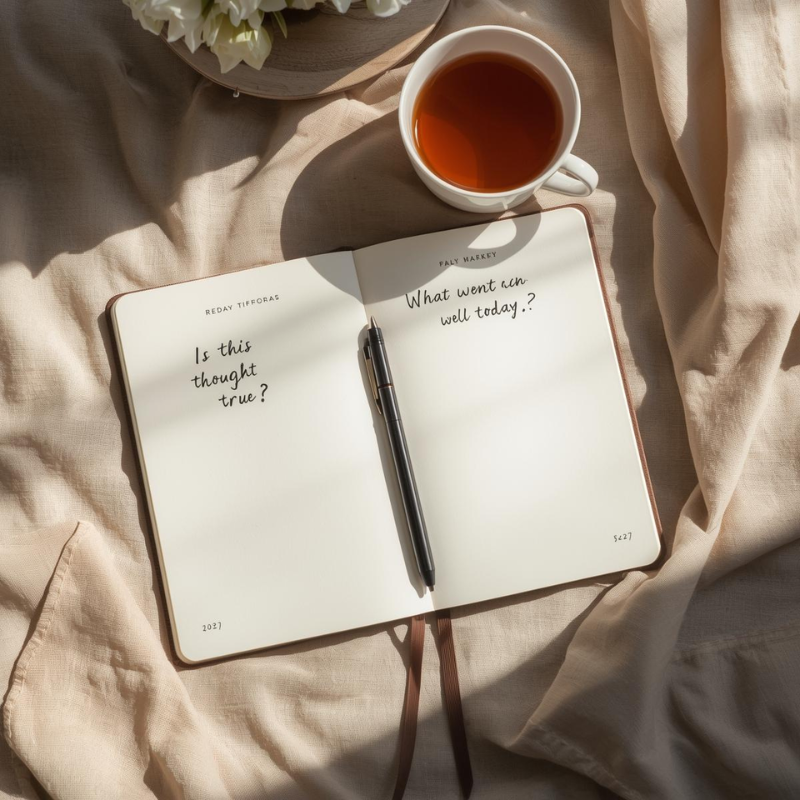
Guided Exercise: A 5-Minute Routine to Regain Control and Reset Your Thoughts
Anxiety often feels like losing control — of your thoughts, your focus, or your day.
It’s easy to get caught in a loop of “what ifs,” self-criticism, and mental clutter.
But the truth is, control doesn’t come from changing everything around you — it comes from changing the way you see and speak to yourself in the moment.
Here’s a simple 5-minute guided exercise to help you reset your mindset, reclaim your calm, and remind yourself that you always have a choice in how you respond.
🕰️ Step 1: Check in With Your Thinking (1 minute)
Pause and ask yourself:
“What am I thinking right now?”
Notice the tone, not just the words.
Is it helpful? Is it true? Is it kind?
Often, we run on autopilot — believing every thought our anxious mind produces. But a thought is not a fact; it’s just a moment of mental activity.
If your thought isn’t helping you, gently challenge it:
“What’s a more balanced way to see this?”
“What might I say to a friend who felt this way?”
Even a small shift in language can change how you feel.
🌤️ Step 2: Spot the Good (2 minutes)
Look back over the past few hours and find two or three small positive experiences.
They don’t have to be big — maybe you enjoyed your coffee, had a moment of calm, or handled something better than expected.
Now ask:
“What does that tell me about me?”
Perhaps it shows you’re resourceful, patient, thoughtful, or learning to slow down.
Recognising these small, positive moments helps retrain your brain to notice what’s going right, not just what’s going wrong or worrying you.
This isn’t toxic positivity — it’s psychological realism. You’re simply collecting evidence that not everything is as bad as your anxious brain might suggest.
🧩 Step 3: Choose Your Perspective (1 minute)
When something feels out of control, remind yourself:
“I can’t always choose what happens, but I can choose how I see it.”
The way you interpret your experiences shapes how you feel about them.
If you look for pressure, you’ll feel it. If you look for progress, you’ll find it.
Ask yourself:
“What’s another way of seeing this that helps me feel calmer or more capable?”
That shift — from threat to challenge, from ‘failure’ to ‘learning’ — helps your emotions rebalance naturally.
🗣️ Step 4: Watch Your Words (1 minute)
Language has power. The words you use in your head and out loud shape your emotional world.
Try swapping these common anxiety-triggering words for ones that feel more balanced:
| Instead of… | Try saying… |
|---|---|
| “I should be coping better.” | “I’m doing the best I can right now.” |
| “I can’t handle this.” | “This feels hard, but I can take it one step at a time.” |
| “I’ve got to fix this.” | “I’d like to make progress with this.” |
| “I need to stop worrying.” | “It’s okay to feel uncomfortable sometimes — it’s human.” |
These small language tweaks are subtle but powerful — they shift your brain from pressure to perspective.
✨ Step 5: Remind Yourself of Control (30 seconds)
Take a breath and say quietly:
“I can’t control every thought — but I can control how I respond to it.”
“I can choose to see this differently.”
You’ve just practiced emotional regulation — not by suppressing anxiety, but by engaging your thinking mind and reminding yourself that you’re still in charge.
🌿 Final Thought
Feeling in control isn’t about never feeling feelings like stress, worry, sadness or anger — it’s about knowing what to do when you do.
By checking your thinking, recognising the positives, choosing your perspective, and speaking to yourself with more compassion, you begin to train your mind to work with you, not against you.
Five minutes, one mindset shift at a time — that’s how you start to feel steady again.
💛 Try This Next
If you found this exercise helpful, explore The Anxiety Specialist’s digital journal kits — like The Inner Voice Reset (coming by 7th Nov)— designed to help you reshape your self-talk and build emotional control through small, consistent steps. Find our kits at www.anxietyspecialist.org/shop