- The Anxiety Specialist
- 07730 465855
- info@anxietyspecialist.org

Can you overcome anxiety?

How Self Aware Are You Really?
09/06/2022
5 Anxiety Myths You Need to Stop Believing
01/02/2025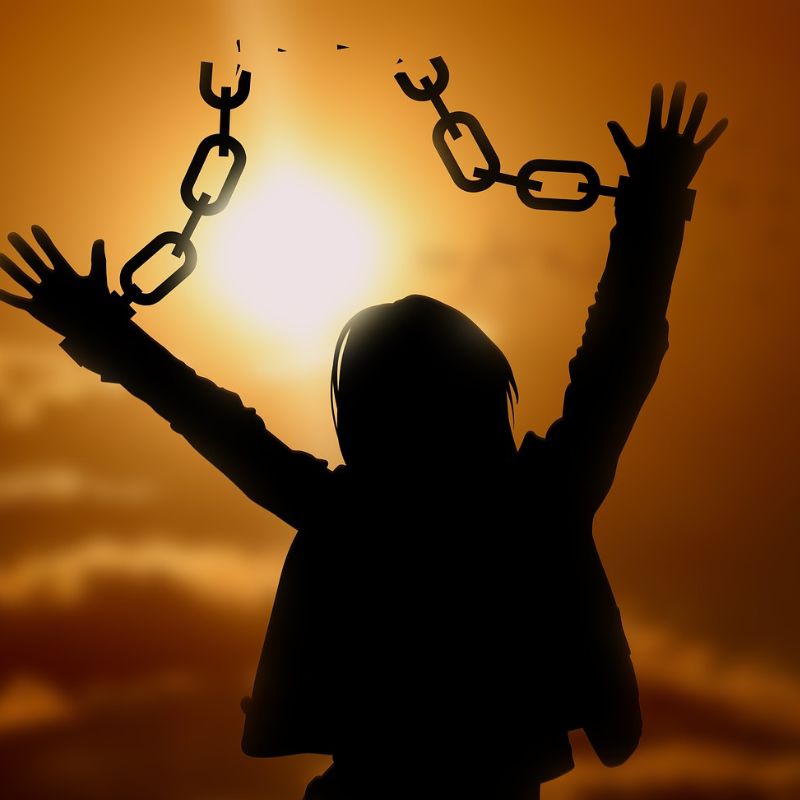
.
Can you overcome anxiety?
.
The big question
Awareness of anxiety and its related symptoms is something that is ever more prevalent in today’s society. Celebrities sharing stories on social media, celeb documentaries, influencers discussing their symptoms and showing empathy for others. Despite this, anxiety diagnoses are continuing to rise at a rapid rate! So the big question that must be asked is… can you overcome anxiety?
Why is there such a problem?
One of the main problems myself (and many others in the field) believe is responsible for the current anxiety crisis, is the medicalisation of mental health. As a society, we have developed the belief and understanding that anxiety is a ‘thing’ that is fundamentally wrong with us in the same way as a physical problem.
In my practice, I hear over and over again the phrase “I’VE GOT anxiety” in the same way that we’d say “I’ve got the flu” or “I’ve got a broken leg” but anxiety isn’t something that we just have. It is not something that we catch. It’s not something that we do to ourselves in the same way that we might have an accident. It is not even something that we can do a blood test or a scan to diagnose.
In other words, it is not possible to ‘have’ anxiety in the way we often think. It’s not a thing that has just randomly happened to you or that you’ve ‘got’ or caught by accident. It is something that is created unconsciously and unwillingly (as, let’s face it, no one would choose to battle with the symptoms that come with anxiety!). The impact of it however is very real but anxiety is still not the same as a medical problem. Anxiety is subjective. It means different things to different people. The impact of anxiety is different for different people – it can range from the mild to the awful extreme and it feels totally beyond your control and often overwhelming.
What is anxiety?
Anxiety is a form of stress in the most basic of terms. Stress is a natural, human response that is completely normal and is actually crucial for our survival. However, stress is something that is based on an in the moment situation or experience. A fight or flight response created by a rush of hormones that allow to deal with a situation that is happening at that present time.
The difference between stress and anxiety is that anxiety creates similar symptoms to stress, but for a situation that isn’t happening/hasn’t happened yet/isn’t likely to happen. Anxiety can be a normal response, but it’s often not helpful and
Anxiety stems from our imagination. It is a feeling and then physical response that is created by thoughts and beliefs that we develop. When you imagine something going wrong, when you picture a worst case scenario, it alerts our body to a threat and this in turn creates a stress response. Why? Because you brain doesn’t know if the threat is real or not. It has no way of distinguishing between real life and imagination.
Think about it. Your brain is constantly interpreting what is going on around you. It takes in what is going on, processes it and forms a conclusion. This conclusion is often based on assumptions or what has happened in similar situations in the past. Your brain imagines the outcome of the situation in order to feel prepared or in order to try to create certainty.
The problem with this is that the reality may not match what you envisage.
How many times have you imagined something going horribly wrong and it’s turned out okay?
How many times have you worried about what people think only to realise nobody even noticed?
How often have you imagined someone being upset with you to find out that they don’t mind.
What about when you imagine the plane crashing/dog biting/other disaster and it really be nothing to worry about?
My point is that imagination is the issue when it comes to anxiety and imagination is often out of line with reality.
What can be done?
How we imagine situations to go, how we predict scenarios, how we worry about things in the future comes from a pattern of thinking that we have usually learnt and then developed and honed into a habit over time.
The beauty of any habit is that it is not fixed. It is not a part of you. It doesn’t make you broken. It is something that can be changed. But it is also something that isn’t likely to change on it’s own either. After all, no one would choose to live with the symptoms of anxiety if they thought they could do something to change them.
It is just like wanting to change a physical habit. Sometimes, it feels so impossible it’s difficult to know where to start and this can end up leaving us feeling powerless and like we have no control over it. It might feel overwhelming, just like it may feel overwhelming trying to lose weight and get fit and healthy. But it can be done! It may be hard work, it will take dedication, you are likely to need support and a plan as well as someone to cheer you on and show you how to do it, but it can be done.
Once you understand that anxiety is not a fixed part of you, but a set of skills that can be untangled and rebuilt for a more helpful purpose, you can hugely improve the symptoms of anxiety and even overcome them completely! This is not to say that you will never feel anxious, scared, stressed, annoyed etc because these are normal responses and emotions. They are part of being human! But you can be in control, you can recognise and change feelings and regulate them, you can realise that they are feelings that are created by you and then take action on them.
It doesn’t have to be a lengthy process that involves delving into past or expressing deep emotions. It can be something that you can learn, that you can enjoy and that you can develop and improve over time.
email – info@anxietyspecialist.org
Book a free, no obligation chat – https://abitwomlow.as.me/