- The Anxiety Specialist
- 07730 465855
- info@anxietyspecialist.org


Emotions Are Not an Illness

Stress Awareness Month: Understanding & Taking Back Control
01/03/2025
Men’s Mental Health Week 2025: Changing the Conversation – And the System
09/06/2025Emotions Are Not an Illness
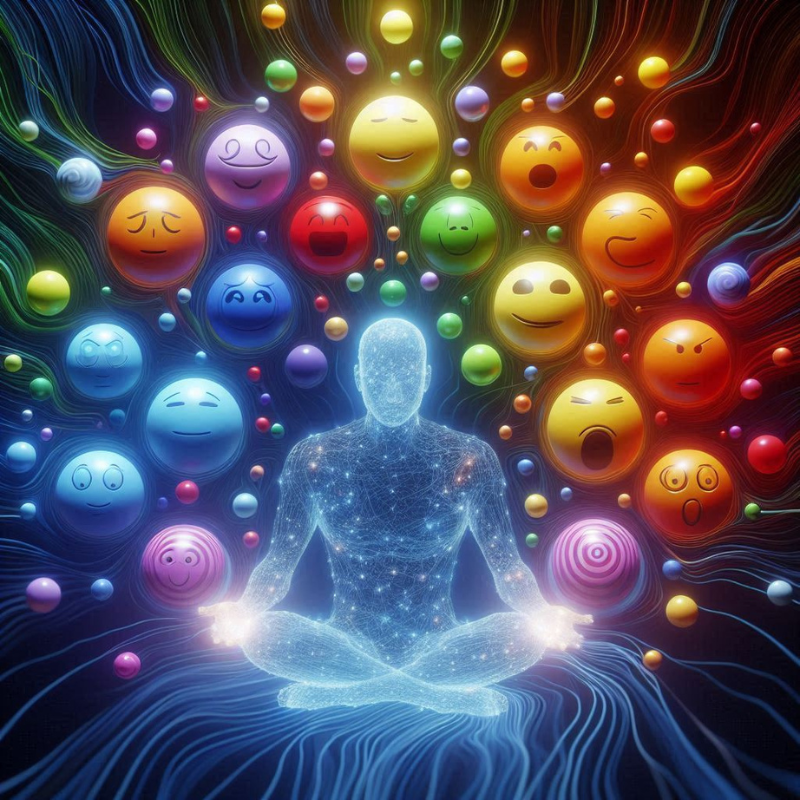
What if we’re not broken—just responding exactly as we were meant to?
In recent years, awareness around mental health has grown rapidly. In many ways, that’s a good thing. We’re talking more openly. We’re recognising struggles. We’re making support more available.
But something else has happened too. In our rush to name, define, and “treat” mental health, we’ve started to medicalise it in ways that may be doing more harm than good.
I recently listened to a psychiatrist share something that that saddened, but didn’t shock me: the countries with the greatest access to mental health care—places like the UK, US, Australia—are actually showing the worst mental health outcomes.
Let that sink in.
It begs the question: are we treating emotions like illnesses? And if so… what’s that doing to us?
Diagnosing Normal Human Responses?
The reality is this: there are no blood tests for anxiety. No scan to confirm depression. Mental health diagnoses are entirely subjective—based on behaviour, language, and interpretation. That’s not necessarily a problem. But it becomes one when we start labelling our emotions as evidence of a disorder.
When we feel overwhelmed, low, anxious, or hopeless, we often assume there’s something wrong with us. But what if those feelings are just a response to what’s happening TO us?
Because here’s the truth: we are now living in a world that human beings were not built for.
We are more socially isolated, more digitally connected but physically disconnected, and more overstimulated than ever. We’re juggling roles, expectations, responsibilities and comparisons with barely a moment to breathe.
And then, when we find ourselves struggling, we assume we’re broken.
But what if you’re not broken?
What if those emotions are just a messenger? What if your low mood is a response to exhaustion? What if your emotions are trying to guide you back to what matters?
Emotions Are Messengers, Not Malfunctions
It’s important to say: none of this minimises your experience. The pain, confusion, panic or hopelessness you feel is very real. But what it might not be is wrong.
Too often we think:
“I feel this way, so there must be something wrong with me.”
But what if we asked instead:
“What’s happened that’s making me feel this way?”
Because emotions don’t just appear from nowhere. They are responses to your environment, your relationships, your thoughts, your unmet needs. They exist for a reason. And they can tell us a lot—if we listen.
The Danger of the Disorder Mindset
When we treat emotions like disorders, we pathologise being human. We turn understandable reactions into lifelong labels. And we start to believe that the problem is us—when often the problem is the way we are living (not as individuals, but as a culture).
The pressure. The pace. The isolation. The lack of support, rest, real connection.
Of course we’re anxious. Of course we’re sad.
We’re running on empty in a world that often leaves us emotionally malnourished.
That doesn’t mean you have a disorder.
It means you’re responding—just as you should.
Let’s Shift the Conversation
It’s time we stop assuming that every emotional struggle is a personal flaw.
It’s time we stop treating emotional responses as clinical problems to be fixed.
It’s time we start listening to our emotions instead of labelling them.
Because you are not broken.
And maybe the most powerful healing begins when we stop trying to “fix” ourselves and start asking what we really need.
Connection. Rest. Safety. Space. Purpose. Compassion.
If your emotions are loud right now, they’re not a malfunction.
They’re a message.
Let’s start listening.
Want more on this topic? Head to www.anxietyspecialist.org to explore how I help others like you move past anxiety, without labelling yourself in the process.